Reactors must be used in conjunction with capacitor banks to perform power factor correction for systems with a large number of nonlinear loads that generate harmonics.
The capacitor and reactor configuration is tuned in a series resonant circuit such that the series resonant frequency is lower than the lowest harmonic frequency in the system. Therefore, this configuration is often called a "tuning capacitor bank" and the reactor is called a "tuning reactor".
Tuning reactors are used to prevent harmonic resonance problems, avoid the risk of overloading capacitors, and have
Helps reduce voltage harmonic distortion in the network.
The tuning frequency can be represented by the reactance rate of the reactor (in %), or by the tuning times, or directly
Then by the frequency (Hz) said.
The most common reactance values are 5.7%, 7%, 12%, and 14%.
Reactive Power Compensation Scheme of Tuning Reactor
The selection of the tuning frequency for this reactive capacitor depends on several factors:
Presence of zero-sequence harmonics (3, 9, – )
Need to reduce harmonic distortion levels
Optimization of components of capacitors and reactors
Frequency of any pulsation control system
In order to prevent interference from the remote control device, the tuning frequency should be selected to be lower than the pulse control frequency.
In the application of tuned filters, the voltage across the capacitor is higher than the nominal system voltage, and the design of the capacitor must
withstand higher voltages.
Depending on the tuning frequency selected, part of the harmonic current is absorbed by the tuning capacitor bank, which must be designed to withstand
Higher current of fundamental current plus harmonic current.
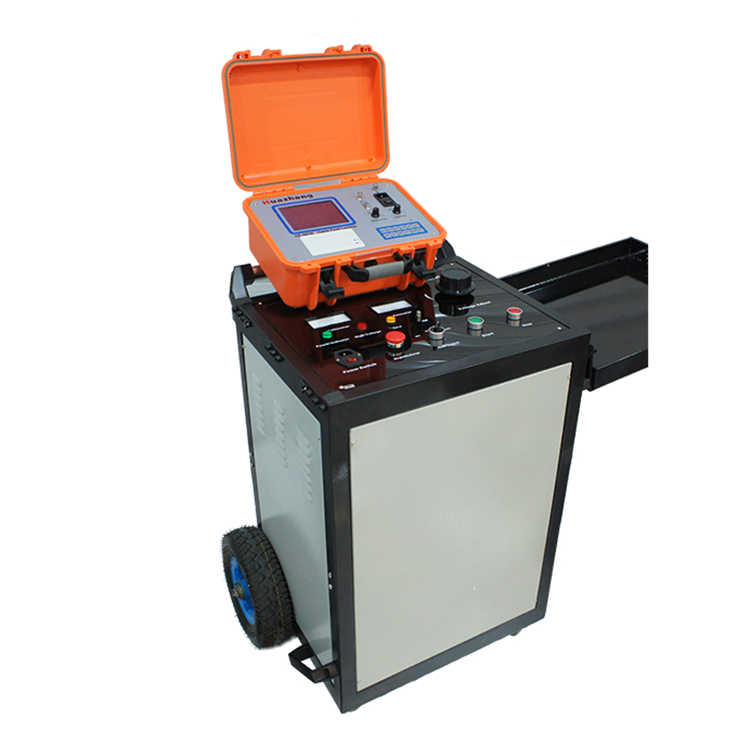
HZ-501B Cable Fault Flash Tester

 中文
中文
 English

 +86-312-6775656
 +86 13731210226
 sales03@bdhuazheng.com
