The industry stipulates that the safe voltage is 36V and the safe current is 10mA. The reasons are as follows: the degree of harm to the human body caused by electric shock mainly depends on the magnitude of the current passing through the human body and the length of the power-on time. The greater the intensity of the current, the greater the fatal danger; the longer the duration, the greater the possibility of death. The minimum current value that can cause people to feel is called the sensing current, the AC is 1mA, and the DC is 5mA; the maximum current that a person can get rid of after an electric shock is called the get rid of the current, the AC is 10mA, and the DC is 50mA; in a short period of time The life-threatening current is called lethal current. For example, a 100mA current passing through the human body for 1 second can be enough to kill a person, so the lethal current is 100mA.
safety voltage
The human body’s response to the current: 8~10mA, it is difficult for the hand to get rid of the electrode, and there is a severe pain (finger joint). 20~25mA, the hand is quickly paralyzed, cannot automatically get rid of the electrode, and it is difficult to breathe. 50~80mA, it is difficult to breathe, and the atrium begins to tremble.
According to Ohm's law (I=U/R), it can be known that the magnitude of the current flowing through the human body is related to the applied voltage and the resistance of the human body. In addition to the human body's own resistance, the resistance of the human body should also be added to the resistance of clothes, shoes, pants, etc., and there are many factors that affect the resistance of the human body, such as wet and sweaty skin, conductive dust, and increased contact with the charged body. The contact area and pressure, as well as the wet and oily dirt of clothes, shoes, socks, etc., can all reduce the resistance of the human body.
Therefore, the magnitude of the current flowing through the human body cannot be calculated in advance. Therefore, in order to determine the safety conditions, the safe current is often not used, but the safe voltage is used to estimate: under normal circumstances, that is, in a dry environment with a high risk of electric shock, scientists have obtained through experiments that in this case Under the maximum resistance of the human body, the safe voltage value of the human body is obtained after inversion. This value is exactly 36V. This is the source of the human body safety voltage 36V.
However, the safety voltage is not absolutely safe, and there have been accidents of electrocution at voltages such as 36V. This is because the body resistance varies from person to person and is affected by environmental conditions, etc. If the operating site is narrow, wet or people are working in metal containers, mines, or pipelines, it is difficult to get rid of the charged body after an electric shock. Even if a 36V safe voltage is used, there is still the possibility of electrocution.
Therefore, when using a safe voltage, the corresponding safe voltage should also be used depending on the environment. For the human body, current is the more critical parameter. High voltage may not necessarily kill you, but strong current will definitely kill you, so why not just write safe current? Because only the voltage is constant in the power grid standards, at the rated voltage, the greater the resistance, the smaller the current that passes.
For the humid environment with high risk of electric shock (such as welding and repairing in metal containers and pipelines), the safety voltage is specified as 12V. Protect personal safety to a certain extent.
The size of the human body's resistance is an important physical factor that affects the degree of injury to the human body after an electric shock. The resistance of the human body is composed of (internal resistance) and (skin). The resistance in the body is basically stable, about 500Ω. When the contact voltage is 220V, the average human body resistance is 1900Ω; when the contact voltage is 380V, the human body resistance drops to 1200Ω. After analyzing and studying a large amount of experimental data, it is determined that the average value of human body resistance is generally about 2000Ω, and the lower limit value of 1700Ω is usually taken during calculation and analysis. Due to the large resistance of the human body, low voltage will certainly not produce strong current in the human body. Therefore, low voltage must be safe, and usually 12V voltage is an absolutely safe voltage.
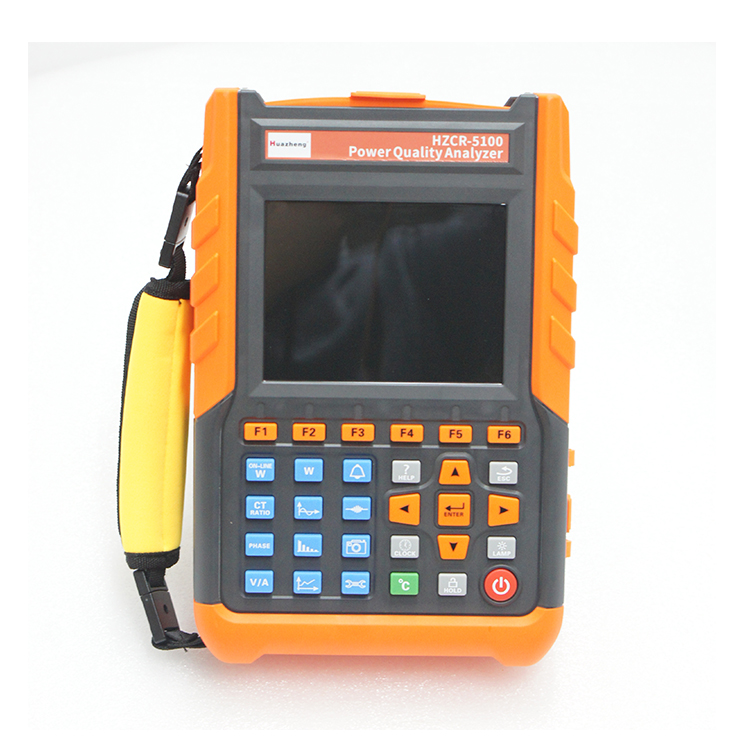
HZCR-5100 Power Quality Analyzer

 中文
中文
 English

 +86-312-6775656
 +86 13731210226
 sales03@bdhuazheng.com
