Oil-immersed Transformer Construction
The core part of the three-phase oil-immersed transformer is composed of a closed iron core and windings wrapped around the iron core posts. In addition, there are oil tanks, oil conservator cabinets, casings, breathers, explosion-proof pipes, radiators, tap changers, gas relays, thermometers, oil purifiers, etc.
(1) Iron core
The iron core is the magnetic circuit part of the transformer. In order to reduce hysteresis and eddy current losses in the iron core, the iron core is made of silicon steel sheets 0.35 mm to 0.5 mm thick. The surfaces of the silicon steel sheets are coated with insulating paint or surface oxide films are used to insulate the sheets from each other. According to the arrangement of the windings in the iron core, there are iron core type and iron shell type. The upright part of the iron core of a three-phase transformer is called the core column, and the low-voltage winding and high-voltage winding of the transformer are set on the column; the horizontal part is called the iron yoke, which is used to form a closed magnetic circuit.
In large-capacity transformers, in order to ensure that the heat emitted by core loss can be fully taken away by the insulating oil during circulation to achieve a good cooling effect, cooling oil channels are often provided in the core.
(2) winding
The winding, also called the coil, is the circuit part of the transformer and is divided into two types: primary and secondary windings. The winding connected to the power supply is called the primary winding, and the winding connected to the load is called the secondary winding. The primary and secondary windings are made of copper or aluminum wire wrapped with high-strength insulation.
The primary and secondary windings of each phase of the three-phase transformer are made into a cylindrical shape and are placed on the same iron core column. The low-voltage winding with a small number of turns is placed inside close to the iron core, and the high-voltage winding with a large number of turns is placed outside the low-voltage winding. This placement is because it is easier for low voltage windings to insulate the core. Sleeves made of insulating material are used to isolate the low-voltage winding and the iron core and between the high-voltage winding and the low-voltage winding to reliably insulate them. In order to facilitate heat dissipation, a certain gap is left between the high and low windings as an oil passage to allow the transformer oil to flow.
The main faults of transformer windings are short circuit between turns and short circuit to the shell. Inter-turn short circuit is mainly caused by insulation aging, or mechanical damage to the insulation caused by overload of the transformer and through short circuit. When the oil level in the transformer drops, causing the winding to expose the oil surface, an inter-turn short circuit can also occur; in addition, when a cross-circuit occurs, the winding is deformed due to overcurrent, causing mechanical damage to the insulation, and an inter-turn short circuit can also occur.
When there is a short circuit between turns, the current in the short-circuited winding may exceed the rated value, but the current of the entire winding may not exceed the rated value. In this case, the gas protection device will operate. When the situation is serious, the differential protection device will also operate.
Short circuits to the outer casing are also caused by aging insulation, moisture in the oil, drop in oil level, or due to lightning and operating overvoltage. In addition, when a through short circuit occurs, the winding is deformed due to overcurrent, and a short circuit to the casing can also occur. When the shell is short-circuited, the gas protection device and the grounding protection are generally activated.
(3) fuel tank
The oil tank is the outer shell of the transformer. The iron core and windings are installed inside and filled with transformer oil. For transformers with relatively large capacity, heat sinks or heat pipes are installed outside the oil tank. Oil leaks are a common problem with oil tanks.
Transformer oil is a mineral oil with good insulating properties. It has two functions:
First, the insulation effect. The insulation performance of transformer oil is better than that of air. Immersing the winding in the oil can improve the insulation performance everywhere, avoid contact with the air, and prevent the winding from getting damp;
The second is the heat dissipation effect, which uses the convection of oil to dissipate the heat generated by the iron core and windings to the outside through the box wall and heat pipe. Transformer oil is divided into three specifications: No. 10, No. 25, and No. 45 based on its freezing point. Their freezing points are -10°C, -25°C, and -45°C respectively. They are generally selected according to local climate conditions.
(4) Oil conservator (oil pillow)
The oil conservator, commonly known as the oil pillow, is a cylindrical container placed horizontally above the oil tank and connected to the oil tank of the transformer by pipes. The volume of the oil conservator is generally about 10% of the volume of the oil tank. The oil conservator is a capsule-type oil conservator, and the capsule isolates the oil in the oil conservator from the outside air. When the transformer oil thermally expands, the oil flows from the oil tank to the oil conservator; when the transformer oil contracts, the oil flows from the oil conservator to the oil tank. The oil conservator has two functions: first, when the volume of transformer oil expands or shrinks with changes in oil temperature, the oil conservator plays the role of oil storage and oil replenishment, ensuring that the oil tank is filled with oil and the iron core and windings are immersed. in the oil; secondly, it can reduce the contact area between the oil surface and the air, preventing the transformer oil from getting damp and deteriorating.
The oil level display of the oil conservator uses a connecting rod ferromagnetic oil level gauge to observe the level of the oil level. When the oil level is insufficient due to leakage and other reasons, oil should be added in time to supplement it. The oil level gauge is engraved with the oil level height standard lines when the oil temperature is -30°C, +20°C and +40°C, as a standard for oil filling. +40℃ on the oil level mark indicates the maximum oil level of the transformer at the installation site when the maximum ambient temperature is +40℃, and the oil level must not exceed this line; +20℃ indicates the oil level when the annual average temperature is +20℃. Height; -30℃ indicates the lowest oil level line of the no-load transformer when the environment is -30℃. It must not be lower than this line. If the oil level is too low, add more oil. The oil pillow is equipped with a breathing hole to communicate the upper space of the oil pillow with the atmosphere. When the transformer oil expands with heat and contracts with cold, the air in the upper part of the oil pillow goes in and out through the breathing hole, and the oil level can rise or fall to prevent deformation or damage of the oil tank.
(5) Sleeve
The lead wire of the transformer winding is connected to the external circuit through the guide rod. The bushing is the insulator between the guide rod and the box cover. It plays the role of insulating and fixing the guide rod. There are two types of casing: high-pressure casing and low-pressure casing.
Insulation sleeve
The lead wires of the transformer winding must pass through insulating sleeves when they are led out of the tank to insulate the live leads. The insulating sleeve is mainly composed of a central conductive rod and a magnetic sleeve. One end of the conductive rod inside the oil tank is connected to the winding, and the other end outside is connected to the external circuit. It is a component of the transformer that is prone to failure.
The structure of the insulating bushing mainly depends on the voltage level. Simple solid magnetic bushings are generally used for low voltage. When the voltage is high, in order to strengthen the insulation capacity, an oil-filled layer is left between the porcelain bushing and the conductive rod. This kind of bushing is called oil-filled bushing. When the voltage is above 110kV, a capacitive charging bushing is used, referred to as a capacitive bushing for short. In addition to filling the inner cavity of the porcelain sleeve with oil, the capacitive bushing also has a capacitive insulator wrapping the conductive rod between the central conductive rod (hollow copper tube) and the flange, which serves as the main connection between the flange and the conductive rod. insulation.
Oil leakage from transformer bushings is the most common fault. The cause of oil leakage from bushings is the aging of the abacus-shaped rubber sealing ring on the upper part of the bushing and the rubber flat gasket at the bottom of the bushing.
(6) Respirator
Respirators, also known as moisture absorbers, usually consist of a tube and glass container filled with a desiccant (silica gel or activated alumina). When the air in the oil pillow expands or shrinks with the volume of the transformer oil, the discharged or inhaled air passes through the respirator. The desiccant in the respirator absorbs moisture in the air and filters the air to keep the oil clean. The particles of silica gel impregnated with cobalt chloride are cobalt blue when dry. However, as the silica gel absorbs water and approaches saturation, the granular silica gel will turn pinkish-white or red. This can be used to determine whether the silica gel has expired. The damp silica gel can be regenerated by heating and drying. When the color of the silica gel particles turns cobalt blue, the regeneration work is completed.
(7) Pressure relief device
Pressure relief devices play an important role in protecting power transformers. In a power transformer filled with transformer oil, if there is an internal fault or short circuit, arc discharge will vaporize the oil in an instant, causing the pressure in the tank to rise very quickly. If this pressure is not released very quickly, the tank can rupture, spraying flammable fuel over a large area, potentially causing a fire and causing even more damage, so steps must be taken to prevent this from happening. There are two types of pressure release devices: explosion-proof tube and pressure releaser. The explosion-proof tube is used for small transformers, and the pressure releaser is used for large and medium-sized transformers.
Explosion-proof pipe (also called fuel injection pipe)
The explosion-proof tube is mounted on the top cover of the transformer, and the trumpet-shaped tube is connected to the atmosphere, and the tube mouth is sealed with a film. When there is a fault inside the transformer, the oil temperature rises, and the oil is violently decomposed to produce a large amount of gas, which increases the pressure in the oil tank sharply. When the pressure in the oil tank rises to 5×10⁴Pa, the explosion-proof tube film is broken, and oil and gas are sprayed out from the nozzle to prevent the oil tank of the transformer from exploding or deforming.
pressure reliever
Compared with explosion-proof pipes, pressure relievers have the advantages of small opening pressure error, short delay time (only 2ms), high control temperature, and can be used repeatedly, so they are widely used in large and medium-sized transformers.
The pressure release device, also known as the pressure reducer, is installed on the top cover of the transformer oil tank, similar to the safety valve of the boiler. When the pressure in the tank exceeds the specified value, the sealing door (valve) of the pressure releaser is pushed open and the gas is discharged. After the pressure decreases, the sealing door closes itself again by the pressure of the spring. It can be removed to measure and correct the operating pressure of the pressure release device before it is put into use or during maintenance.
The adjustment of the operating pressure of the pressure release device must be coordinated with the setting of the operating flow rate of the gas relay.
The pressure releaser is installed on the upper part of the fuel tank cap, and is usually connected to a section of rising pipe to make the height of the releaser equal to the height of the oil pillow to eliminate the difference in oil pressure and static pressure under normal circumstances.
(8) Radiator
Radiator forms include corrugated, fan-shaped, circular, pipe-row, etc. The larger the heat dissipation area, the better the heat dissipation effect. When there is a temperature difference between the oil temperature in the upper part of the transformer and the oil temperature in the lower part, convection of the oil is formed through the radiator, and then flows back to the oil tank after being cooled by the radiator, thereby reducing the temperature of the transformer. In order to improve the cooling effect of the transformer, measures such as air cooling, forced oil air cooling and forced oil water cooling can be adopted. The main radiator failure is oil leakage.
(9) Gas gas relay
Use the flange to install the gas relay between the connecting pipe of the oil conservator and the transformer tank cover. During operation, the gas relay is filled with oil. When a slight fault occurs inside the transformer and bubbles are generated, they will first gather in the upper space of the gas relay. And forces the oil level to drop, causing the upper open cup to lose buoyancy and increase its own mass, thereby deflecting in the opposite direction, causing the magnet to move closer to the reed switch. The principle of lower contact baffle type is the same.
(10) Temperature measuring device
Oil surface temperature rise refers to the value by which the oil surface temperature in the oil tank is allowed to exceed the ambient temperature when the transformer is operating under rated conditions.
The oil temperature of the main transformer body is temporarily set to alarm at 80℃ and trip at 100℃.
(11) Neutral point grounding knife
The neutral point grounding method of my country's 110kV power system mainly adopts the neutral point direct grounding method (including the neutral point grounding method through a small resistance), that is, a large grounding current system. Because when a single-phase ground fault occurs in the system, the ground short-circuit current is very large.
When the transformer is shut down for power supply operation, its neutral point must be grounded. Because the transformer winding is semi-insulated (also called graded insulation), that is, the main insulation of the transformer winding near the neutral point has a lower insulation level than the insulation level at the end of the winding. Therefore, in order to prevent overvoltage from damaging the transformer insulation, when the transformer is shut down for power transmission operation, its neutral point must be grounded.
(12) Tap changer (also called switcher)
When the oil conservator is used for an on-load voltage regulating transformer, a capsule-free switch oil conservator is installed at the bottom of the oil conservator.
Transformer voltage regulation methods are divided into two types: on-load voltage regulation and no-load voltage regulation:
On-load voltage regulation means that the tap position of the transformer can be adjusted during operation, thereby changing the transformer ratio to achieve the purpose of voltage regulation.
Transformer taps are generally tapped from the high voltage side. The main considerations are:
(1) The high-voltage winding of the transformer is generally on the outside, and the tap leads out for easy connection;
(2) The current on the high-voltage side is smaller, and the conductor cross-section of the current-carrying part of the lead wire and tap switch is smaller, so the impact of poor contact can be easily solved.
In principle, the tap can be on either side. An economic and technical comparison must be made. For example, the tap of a 500kV large step-down transformer is drawn from the 220kV side, while the 500kV side is fixed.
When the voltage is too low or too high and several taps of the on-load tap-changer need to be adjusted to meet the requirements, the following situations need to be paid attention to:
It should be adjusted one by one, that is, every time you press the N+1 or N-1 button, pause for 1 minute in the middle, and press the button again when a new number appears on the gear indicator. Repeat the above process in turn until you reach the final goal. When the electric operation is linked (i.e. one operation, more than one tap will be adjusted, commonly known as sliding), the second tap position should be displayed on the gear indicator of the main transformer control panel, and the emergency button should be pressed immediately. Stop button and switch to manual operation.
(13) Oil purifier (also called temperature difference filter)
The oil purifier is a container filled with adsorbent (silica gel or activated alumina), which is installed on the side wall of the transformer oil tank or the lower part of the strong oil cooler. When the transformer is running, due to the temperature difference between the upper and lower oil layers, the transformer oil passes through the oil purifier from top to bottom to form convection. When the oil comes into contact with the adsorbent, the moisture, acid and oxides in it are absorbed, making the oil clean and extending the service life of the oil.
■ Oil system of oil-immersed transformer
Oil-immersed transformers have several independent oil systems that are isolated from each other. When the oil-immersed transformer is in operation, the oils in these independent oil systems are not connected to each other, and the oil quality and operating conditions are also different. It is necessary to analyze the gas content in the oil to determine whether there are potential faults.
(1) Main body internal oil system
The oil system communicating with the oil around the winding is the system in the main body, including the oil in the cooler or radiator, the oil in the oil conservator, and the oil in the oil-filled bushing of 35kV and below.
When filling oil, the gas bleed plug stored in the oil system must be released. Generally speaking, the above components should have their own bleed plugs. The oil in the main body mainly plays the role of insulation and cooling. Oil also increases the electrical strength of insulating paper or cardboard. During vacuum oil filling, if some parts cannot withstand the same vacuum strength as the main oil tank can withstand, temporary gate isolation should be used, such as the gate valve between the oil conservator and the main oil tank. The lift of the submersible oil pump on the cooler must be sufficient to prevent air from being sucked in due to negative pressure. This oil system must have a protection system with a pressure relief device to eliminate the pressure generated when the oil body fails.
(2) Oil in the diverter switch chamber of the on-load tap-changer
This part of the oil has its own protection system, namely flow relay, oil conservator, and pressure relief valve. The oil in this switch chamber serves to insulate and extinguish current. The oil will go in the oil generated when the diverter switch cuts off the load current. This oil system must have good sealing performance, and the sealing performance must be protected even if arc pressure is generated during the switching process.
Although the oil in the diverter switch chamber of the on-load tap-changer is isolated from the oil in the main body, in order to avoid damaging the seal of the diverter switch chamber during vacuum oil filling, it should be vacuum oiled at the same time as the oil in the main body. The system has the same vacuum degree. If necessary, the oil conservator of this system should also be isolated during vacuuming. For structural convenience, the oil storage tank of the main body and the oil storage tank of the switch room are designed to be isolated from each other as a whole.
(3) Fully sealed for voltage levels of 60kV and above
This oil system mainly plays an insulating role, or increases the electrical strength of the insulating paper in the oil capacitor bushing. When filling oil into the main body, the terminals at the end of the casing should be sealed to prevent air from entering.
(4) Oil in the high-voltage outlet box or oil in the gas outlet box
The high-voltage outlet lines of the three-phase 500kV transformer pass through the corrugated insulation isolation oil system. This oil system mainly plays an insulating role.
To simplify the structure, this oil system can also be connected to the oil system in the main body through connecting pipes or designed as a separate oil system.
(5) Conducting various insulation tests on oil-immersed transformers
First, deflate, to release possibly stored gas through the vent plug. By analyzing the gas chromatographic analysis in oil of each system, it is possible to predict whether there is a potential failure. Each oil system must meet operational requirements, such as absorbing changes in oil volume when oil expands and contracts, oil drain valves, vent plugs, isolation valves between coolers and radiators and the main oil tank, etc. Each oil system has good sealing performance. The oil in the transfer switch chamber of the on-load tap changer should be replaced separately without releasing the oil in the main body. During transportation, the oil in the main body can be released and filled with dry nitrogen.
■ Fault analysis of oil-immersed transformer
The common failures of transformers in operation include failures of windings, bushings, tap changers, iron cores, oil tanks and other accessories.
(1) Winding fault
Mainly include inter-turn short circuit, winding grounding, interphase short circuit, disconnection and open welding of joints, etc.
(2) Casing failure
The fouling of the transformer bushing will cause pollution flashover in heavy fog or light rain, which will cause single-phase grounding or short-circuit between phases on the high-voltage side of the transformer.
(3) Severe leakage
If the transformer is leaking oil seriously during operation or continuously leaking from the damaged area so that the oil level can no longer be seen on the oil level gauge, the transformer should be immediately deactivated for leak repair and refueling. The reasons for oil leakage from the transformer include cracked or sealed welds. Parts fail, and the fuel tank is severely corroded and damaged by vibration and external force during operation.
(4) Tap changer failure
Common faults include poor contact or inaccurate position of the tap changer, melting and burning of the contact surface, and discharge of interphase contacts or discharge of each tap.
(5) Failure caused by overvoltage
When a running transformer is struck by lightning, the lightning potential is very high, which will cause an external overvoltage of the transformer. When certain parameters of the power system change, an internal overvoltage of the transformer will be caused due to electromagnetic oscillation. These two Most of the transformer damage caused by such overvoltage is the breakdown of the main insulation of the winding, resulting in transformer failure.
(6) Failure of the iron core
Most of the failures of the iron core are caused by the insulation damage of the core screw or the clamping screw of the iron core.
(7) Leakage of oil
If the oil level of the transformer oil is too low, the bushing lead wire and the tap changer will be exposed to the air, and the insulation level will be greatly reduced, so it is easy to cause breakdown discharge.
■ Transformer operation and maintenance
In order to ensure that the transformer can operate safely and provide reliable power supply, when an abnormality occurs in the transformer, it can be discovered and dealt with in time to eliminate the fault in the bud to prevent the occurrence and expansion of the accident. Therefore, the transformer in operation must be inspected regularly. Tour inspections, and make a record of the operation.
(1) The normal operation mode of the transformer
① Rated operation mode
Under the specified cooling conditions, the transformer can operate according to the nameplate specifications. The allowable temperature of the oil-immersed transformer in operation should be checked according to the upper oil temperature. The oil temperature of the upper layer shall comply with the manufacturer's regulations, but the maximum shall not exceed 95°C. In order to prevent the transformer oil from deteriorating too quickly, the upper oil temperature should not exceed 85°C frequently.
The applied voltage of the transformer should generally not exceed 105% of the rated value. At this time, the secondary side of the transformer can carry the rated current. In individual cases, after testing or with the agreement of the manufacturer, the applied voltage may be 110% of the rated voltage.
② Allowable overload
Transformers can operate under normal overload or accident overload conditions. Normal overload can be used frequently, and its allowable value is determined based on the load curve of the transformer, cooling conditions, and the load carried by the transformer before overload. Accident overloads are only allowed in accident situations (transformers that are still operational).
The allowable value of accident overload should comply with the manufacturer's regulations; if there are no manufacturer's regulations, the self-cooling oil-immersed transformer can be operated according to the requirements in the table.
(2) Abnormal operation and emergency treatment of transformers
(a) Irregularities in operation. If any abnormal phenomena are found during operation of the transformer (such as oil leakage, insufficient oil level in the oil pillow, abnormal heating, abnormal sound, etc.), efforts should be made to eliminate them. If one of the following situations occurs, stop repairing immediately.
① The internal sound is loud, very uneven, and there are popping sounds.
② Under normal cooling conditions, the temperature is abnormal and continues to rise.
③ Fuel injection from oil conservator or explosion-proof pipe.
④ Oil leakage causes the oil level to drop below the limit on the oil level indicator.
⑤ The oil color changes too much, and carbonaceous appears in the oil.
⑥ The bushing has serious damage and discharge.
(b) Inadmissible overload, abnormal temperature rise and oil level. If the overload of the transformer exceeds the allowable value, the load of the transformer should be adjusted in time. When the transformer oil temperature rises beyond the allowable limit, the cause should be identified and measures should be taken to reduce it. Therefore, the following work must be performed.
① Check the load of the transformer and the temperature of the cooling medium, and check with the expected temperature under this load and cooling temperature.
② Check the temperature gauge.
③ Check the mechanical cooling device of the transformer or the ventilation condition of the transformer room.
If it is found that the oil temperature is more than 10°C higher than usual under the same load and cooling temperature, or the oil temperature continues to rise while the load remains unchanged, and the cooling device, transformer room ventilation and thermometer are all normal, it may be an internal fault of the transformer (such as Fire in the iron core, short circuit between coil layers, etc.), stop repairs immediately. If the oil in the transformer has solidified, the transformer is allowed to be put into operation with load, but attention must be paid to whether the upper oil temperature and oil circulation are normal.
When it is found that the oil level of the transformer is significantly lower than the oil level that the oil temperature should be at that time, oil should be added immediately. If the oil level drops rapidly due to a large amount of oil leakage, it is forbidden to change the gas relay to only act on the signal, but measures must be taken quickly to plug the leakage and refuel immediately.
(c) Processing when the gas relay operates. When the gas relay signal operates, the transformer should be inspected to find out the cause of the signal operation, whether it is due to air intrusion into the transformer, a drop in oil level, or a secondary circuit failure. If the fault cannot be detected outside the transformer, the nature of the gas accumulated in the relay needs to be identified. If the gas is colorless, odorless and non-flammable, it is air separated from the oil and the transformer can still continue to operate. If the gas is flammable, the transformer must be stopped and the cause of the operation must be carefully studied.
When checking whether the gas is flammable, special care must be taken not to place the fire close to the top of the relay, but 5 to 6 cm above it. If the operation of the gas relay is not caused by air intrusion into the transformer, the flash point of the oil should be checked. If the flash point is lower than the past record by more than 5°C, it means there is a fault in the transformer.
If the transformer trips due to the operation of the gas relay and is proved to be flammable gas, the transformer shall not be put into operation again without special inspection and passing the test.
There are generally two types of gas relay actions depending on the nature of the fault: one is a signal action without tripping; the other is both actions at the same time.
If the signal acts but does not trip, there are usually the following reasons.
① Air enters the transformer due to oil leakage, refueling or loose cooling system.
② The oil level slowly drops due to temperature drop or oil leakage.
③ A small amount of gas is produced due to transformer failure.
④ Caused by a penetrating short circuit. If the signal and switch act at the same time, or if only the switch acts, it may be due to a serious fault inside the transformer, the oil level drops too fast, or there is a fault in the secondary circuit of the protection device. Under certain circumstances, such as after repairs, the air in the oil separates too quickly, which can also cause the switch to trip.
(d) Transformer oil leakage treatment
There are two types of oil leakage: weld oil leakage and seal oil leakage. The treatment for oil leakage from welds is repair welding. During welding, the machine body should be lifted out and the oil should be drained out. The cause of seal oil leakage should be identified. If the operation is poor (the sealing gasket is not placed correctly, the pressure is uneven, the pressure is insufficient, etc.), it should be repaired as appropriate. If the gasket is aged or damaged (such as the oil-resistant rubber becomes sticky, loses elasticity, cracks, etc.), the sealing material should be replaced.
(3) Itinerant inspection of oil-immersed transformers
Frequent inspections and monitoring of operating transformers should be carried out to detect abnormal phenomena or faults in a timely manner and avoid serious accidents.
Items to be inspected and monitored generally include:
(1) Is there any abnormal sound from the transformer, such as uneven sound or discharge sound?
(2) Whether the oil level is normal and whether there is leakage or oil leakage.
(3) Whether the oil temperature is normal (the upper oil temperature should generally not exceed 85°C).
(4) Whether the casing is clean and whether there are cracks, damage, discharge, etc.
(5) Is there any heating phenomenon in the joint?
(6) Whether the explosion-proof membrane of the explosion-proof tube is complete.
(7) Whether the gas relay leaks oil and whether it is filled with oil inside.
(8) Whether the respirator is unblocked, whether the oil level of the oil-sealed respirator is normal, and whether the silica gel in the respirator has been saturated with moisture.
(9) Whether the cooling system is operating normally.
(10) Whether the shell ground wire is intact.
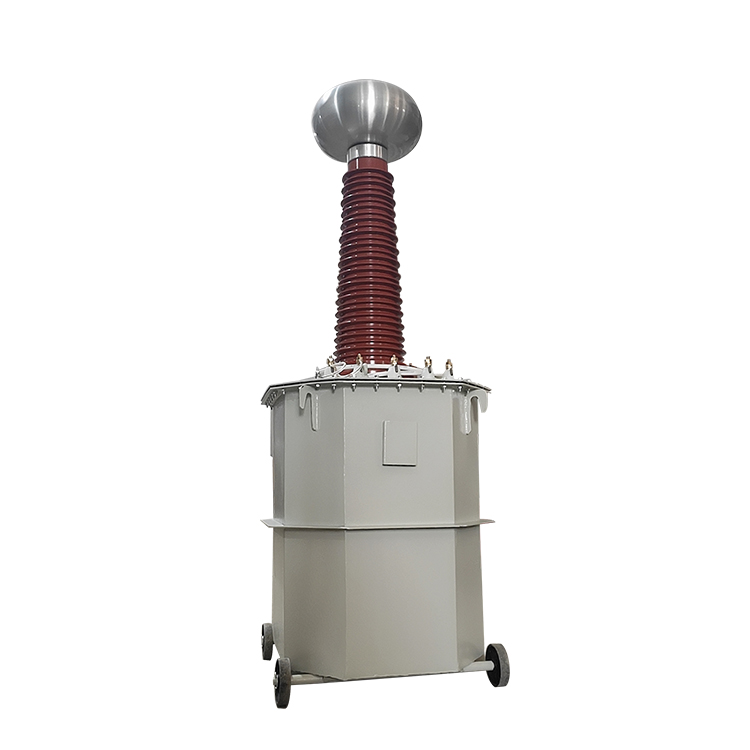
HZJ & HZJZ Oil Type Testing Transformer

 中文
中文
 English

 +86-312-6775656
 +86 13731210226
 sales03@bdhuazheng.com
