For asynchronous motors, slip is a necessary condition for motor operation, that is, the rotor speed is always smaller than the speed of the rotating magnetic field. For synchronous motors, the magnetic fields of the stator and rotor always maintain the same pace, that is, the rotation speed of the motor is consistent with the speed of the magnetic field. When the two are inconsistent or different, it is out of step.
From a structural analysis, the stator structure of a synchronous motor is no different from that of an asynchronous machine. When a three-phase current is passed through, a synchronous rotating magnetic field will be generated; the rotor part of the motor also has a sinusoidally distributed magnetic field with DC excitation. This excitation magnetic field can also be generated by permanent magnets.
When the motor is running normally, the rotation speed of the rotor magnetic field is consistent with the rotation speed of the stator magnetic field, that is, the stator and rotor magnetic fields are relatively fixed in space. This is the synchronous nature of the synchronous motor. Once the two are inconsistent, it is considered The motor is out of step.
Taking the rotation direction of the rotor as a reference, when the rotor magnetic field leads the stator magnetic field, it can be understood that the rotor magnetic field is dominant, that is, based on energy conversion under the action of power, the synchronous motor is in a generator state; on the contrary, it is still based on the rotation direction of the motor rotor. For reference, when the rotor magnetic field lags behind the stator magnetic field, we can understand that the stator magnetic field pulls the rotor to move, and the motor is in the motor state. During the operation of the motor, when the load dragged by the rotor increases, the lag of the rotor magnetic field relative to the stator magnetic field will increase. The relationship between the two is represented by the circumferential angle, which is also commonly called the power angle. The size of can reflect the power of the motor, that is, when the rated voltage and rated current are the same, the greater the power, the greater the corresponding power angle.
Regardless of the motor state or the generator state, when the motor is no-load, the theoretical power angle is zero, that is, the two magnetic fields completely overlap. However, the actual situation is that due to some losses of the motor, there is still a power angle between the two. It exists, but is smaller.
When the rotor and stator magnetic fields are out of sync, the motor power angle will change. When the rotor lags behind the stator magnetic field, the stator magnetic field produces driving force on the rotor; when the rotor magnetic field leads the stator magnetic field, the stator magnetic field produces resistance on the rotor, so the average torque is zero. Since the rotor gets no torque and power, it slowly stops.
When a synchronous motor is running, the stator magnetic field drives the rotor magnetic field to rotate. There is a fixed torque between the two magnetic fields, and the rotational speeds of the two must be equal. Once the speeds of the two are not equal, the synchronous torque does not exist and the motor will slowly stop. This phenomenon in which the rotor speed is out of sync with the stator magnetic field, causing the synchronous torque to disappear and the rotor to slowly stop, is called "out-of-synchronization phenomenon". When out-of-step occurs, the stator current rises rapidly, which is very unfavorable. The power supply should be cut off as soon as possible to avoid damaging the motor.
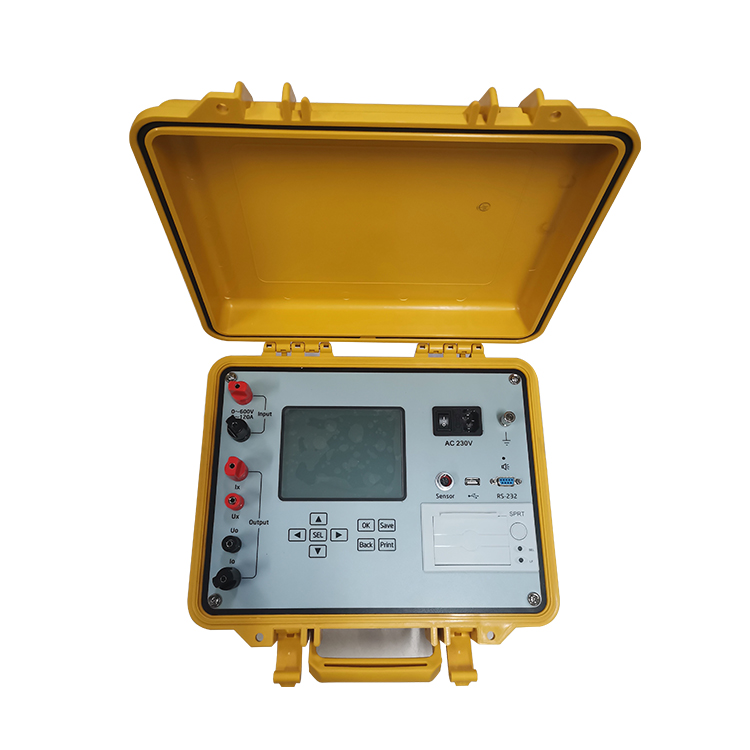
HZ9110 Generator Rotor AC Impedance Tester

 中文
中文
 English

 +86-312-6775656
 +86 13731210226
 sales03@bdhuazheng.com
