1. Winding grounding
Refers to the grounding caused by damage to the insulation between the winding and the chassis.
1. Fault phenomenon
The casing is electrified, the control circuit is out of control, and the winding is short-circuited and heated, causing the motor to fail to operate normally.
2. Causes
The insulation resistance of the windings decreases due to moisture; the motor is overloaded for a long time; harmful gases corrode; metal foreign matter invades the inside of the windings and damages the insulation; the insulation is damaged and hits the iron core when rewinding the stator winding; the ends of the windings hit the end cover base; the stator and rotor
Friction causes insulation burns; the insulation of the lead wire is damaged and collides with the shell; overvoltage (such as lightning strikes) causes insulation breakdown.
3. Inspection method
(1) Observation method. Visually inspect the ends of the windings and the insulation in the trunking to see if there are any signs of damage or charring. If there are any, it is the grounding point.
(2) Multimeter inspection method. Check with the low resistance setting of the multimeter. If the reading is very small, it is grounded.
(3) Megger method. Use different megohmmeters according to different levels to measure the insulation resistance of each set of resistors. If the reading is zero, it means that the winding is grounded. However, if the motor insulation is affected by moisture or breaks down due to an accident, it needs to be determined based on experience. Generally speaking, When the pointer swings unsteadily at "0", it can be considered to have a certain resistance value.
(4) Light test method. If the test light is on, it means the winding is grounded. If sparks or smoke are found somewhere, it is the winding ground fault point. If the light is dimly lit, the insulation has ground breakdown. If the light does not light up, but sparks appear when the test rod is grounded, it means that the winding has not broken down, but is just severely affected by moisture. You can also use hard wood to tap lightly on the edge of the shell. When you tap on a certain place and wait for it to turn off and then light up, it means that the current is on and off, and that place is the grounding point.
(5) Current penetration burning method. Using a voltage regulating transformer, after connecting to the power supply, the grounding point will heat up quickly, and the place where the insulation smokes is the grounding point. Special attention should be paid to small motors not exceeding twice the rated current for no more than half a minute; for large motors, the rated current should be 20%-50% or gradually increase the current, and cut off the power immediately when the grounding point starts to smoke.
(6) Group elimination method. For cases where the grounding point is inside the iron core and the burning is severe, the burned copper wire and the iron core are fused together. The method used is to divide the grounded one-phase winding into two halves, and so on, and finally find the grounding point.
In addition, there are high-voltage test methods, magnetic needle exploration methods, power frequency vibration methods, etc., which will not be introduced here.
4. Treatment method
(1) If the winding is grounded due to moisture, it should be dried first. When cooled to about 60-70℃, insulating paint should be poured on it and then dried.
(2) When the insulation at the end of the winding is damaged, re-insulate the grounding point, paint it, and then dry it.
(3) When the winding grounding point is in the slot, the winding should be rewinded or some winding components should be replaced.
Finally, different megohmmeters are used for measurement to meet the technical requirements.
2. Winding short circuit
Due to insulation damage caused by excessive motor current, excessive power supply voltage changes, single-phase operation, mechanical bumps, poor manufacturing, etc., it is divided into short circuit between winding turns, short circuit between windings, short circuit between winding poles and short circuit between winding phases.
1. Fault phenomenon
The uneven distribution of the magnetic field of ions and the unbalanced three-phase current will aggravate the vibration and noise of the motor during operation. In severe cases, the motor cannot start, and a large short-circuit current will be generated in the short-circuit coil, causing the coil to quickly heat up and burn out.
2. Causes
The motor is overloaded for a long time, causing the insulation to age and lose its insulation effect; the insulation is damaged when inserting wires; the winding is damp, which reduces the insulation resistance and causes insulation breakdown; the end and inter-layer insulation materials are not padded properly or are damaged during shaping; the insulation of the end connecting wire is damaged. ; Overvoltage or lightning strikes cause insulation breakdown; the ends of the rotor and stator windings rub against each other, causing insulation damage; metal foreign objects fall into the motor and there is too much oil.
3. Inspection method
(1) External observation method. Observe whether the junction box and winding ends are burnt, and whether the windings are overheated and leave dark brown
Colorful and smelly.
(2) Temperature detection method. Run without load for 20 minutes (stop immediately if abnormality is found), and touch each part of the winding with the back of your hand to see if the temperature exceeds the normal temperature.
(3) Electrical test method. Use an ammeter to measure. If the current of a certain phase is too large, it means there is a short circuit in that phase.
(4) Bridge inspection. Measure the DC resistance of each winding. Generally, the difference should not exceed 5%. If it exceeds, the phase with the smaller resistance will have a short circuit fault.
(5) Short circuit detector method. If the winding under test has a short circuit, the steel sheet will vibrate.
(6) Multimeter or megger method. Measure the insulation resistance between any two-phase windings. If the reading is extremely small or zero, it means there is a short circuit between the two-phase windings.
(7) Voltage drop method. After connecting the three windings in series, low-voltage safe alternating current was supplied, and a short circuit fault was detected in the small group.
(8) Current method. When the motor is running without load, first measure the three-phase current, then switch the two phases and compare them. If it does not change with the power supply switch, the one-phase winding with the larger current has a short circuit.
4. Short circuit treatment method
(1) The short circuit point is at the end. The short-circuit point can be separated with insulating material, or the insulated wire can be re-wrapped, painted and dried again.
(2) The short circuit is in the wire slot. After softening it, find the short circuit point and repair it, put it back into the trunking, and then paint and dry it.
(3) For each phase winding with less than 1/12 short-circuit turns, cut off all short-circuit lines when the number of turns is connected in series, and connect the conductive parts to form a closed loop for emergency use.
(4) When the number of turns at the short-circuit point of the winding exceeds 1/12, all must be removed and rewound.
3. Winding open circuit
Due to poor welding or the use of corrosive flux, and failure to clean it after welding, the pot may become welded or loose; the coil short circuit, short circuit and ground fault may also cause the wires to burn due to mechanical stress or collision. When one or several wires in the wire are short-circuited, the temperature of the other wires will rise due to the increase in current, causing the winding to heat up and open the circuit. It is generally divided into wire break at the end of one phase winding, short circuit between turns, break at the parallel branch, multiple wires burning one break, and rotor cage breakage.
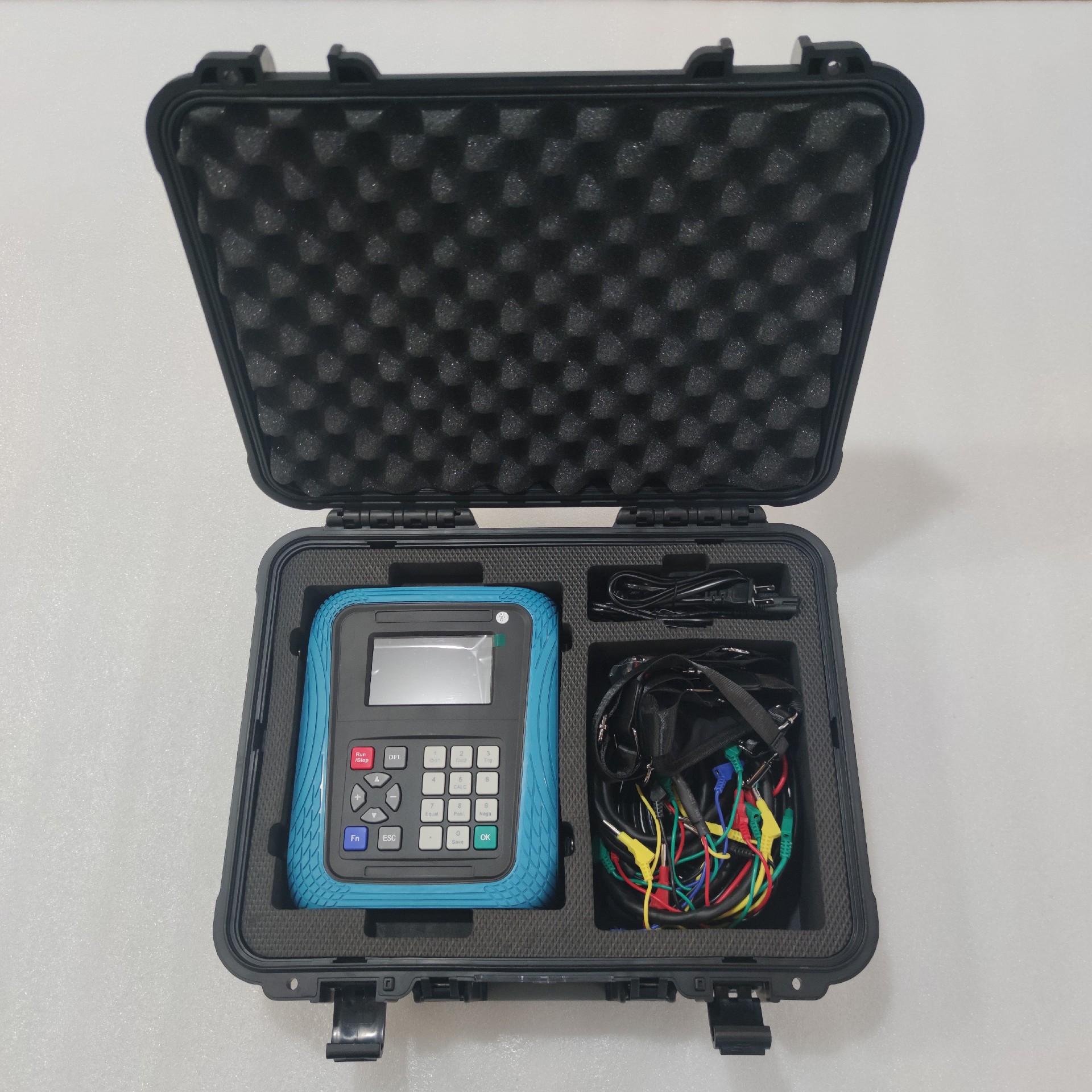
HZJB-1700 Hand-held Three-phase Relay Protection Tester

 中文
中文
 English

 +86-312-6775656
 +86 13731210226
 sales03@bdhuazheng.com
