1. Operation inspection measures for distribution transformers
(1) Noise inspection
Distribution transformers usually emit a "buzzing" sound during operation, which is uniform and slight. When the sound changes, it means that there is a certain fault in the distribution transformer. Therefore, in the process of daily maintenance and management of distribution transformers, checking their noise is one of the key ways.
The inspection method is: use an insulating tie rod, place a section of it firmly on the distribution transformer, listen to the sound from the distribution transformer from the other end, and judge whether there is noise [1]. If a "crackling" sound is heard at this time, it means that the distribution transformer has a core breakdown fault during operation; if the noise heard is very heavy and the sound is loud, it means that the distribution transformer is under load current. Under excessive operating conditions; if the noise level is high and accompanied by sharp sounds, it means that the core of the distribution transformer is in a supersaturated state and the power supply voltage is relatively high.
(2) Conduct a comprehensive inspection of the oil level, oil temperature and oil color
In the process of checking the operating status of distribution transformers, oil level, oil temperature and oil color are one of the key contents. When a distribution transformer is running, it usually dissipates a certain amount of heat. If the operating current is relatively large when flowing through the coil, the amount of heat generated will increase, which will cause the oil temperature to continue to rise. The maximum oil temperature of a distribution transformer under normal operation is usually 85 to 95 degrees Celsius. If the oil temperature exceeds this limit during actual inspection, it means that the internal heating of the distribution transformer has intensified, and shutdown repairs should be carried out in time. The oil level of a distribution transformer under normal operation is usually between 1/4 and 3/4. If the oil level is abnormal, it is likely to be caused by oil leakage. Therefore, staff must check the equipment in time; the oil color of the distribution transformer under normal operation is light yellow, which will turn into light red after a period of operation. If the color deepens, it means that the equipment has oxidation and aging problems. .
2. Operation and maintenance measures of distribution transformers
(1) Proper installation of external equipment
During the routine maintenance of distribution transformers, insulation covers should be properly installed at the low-voltage and high-voltage ends to increase prevention of natural disasters and damage from external forces. In this way, the impact of falling objects from high altitude on the distribution transformer will be reduced, making it less likely to cause low-voltage short circuit and burnout problems [2]. However, the low-voltage metering box cannot be installed in the distribution transformer, because the distribution transformer has a long running time during actual operation. If a low-voltage metering box is used, it will easily lead to glass breakage. If it cannot be repaired in time, Replacement, rainfall, etc. will pose serious threats to the safe operation of distribution transformers.
(2) Properly install lightning arresters
In the process of daily maintenance of distribution transformers and over-voltage protection work, lightning arresters should be used reasonably. The arresters are mainly made of gap-free metal oxide. In this way, the distribution transformer will not Being seriously attacked by high-voltage lightning waves can reduce the probability of internal insulation breakdown and short circuit. When performing routine maintenance on distribution transformers, staff should regularly conduct ground resistance testing to strictly prohibit the occurrence of desoldering problems at welding points, thereby preventing the problem of excessive ground resistance. In the process of reasonable selection of low-voltage overcurrent protection settings and fuse melts, the protection of distribution transformers can also be increased. When a short circuit or fault occurs in the low-voltage side main circuit, the over-current protection action will occur in the low-voltage side leakage main circuit breaker. At this time, the fusing phenomenon cannot occur in the high-voltage side melt, so this should become the distribution transformer operation The focus of maintenance work.
3. Common troubleshooting of distribution transformers
(1) Short circuit between winding turns
Winding turn-to-turn short circuit is one of the common faults during the operation of distribution transformers. When this fault occurs, the oil temperature of the distribution transformer will continue to rise, and black smoke will emerge from the oil pillow cover. At the same time, the overall operating temperature of the distribution transformer will be relatively high, which will cause the gas relay to be triggered. This failure is usually caused by water intrusion into the transformer. At this time, the windings are immersed in water, and the insulation will be damaged at the welding joints and wires. The immersion of debris into the oil passage is also one of the main reasons for this failure. In the process of dealing with this fault, staff are required to carry out regular maintenance of distribution transformers, repair failed windings in a timely manner, and regularly update equipment with aging insulation.
(2) Automatic tripping accident of distribution transformer
Usually, circuit breakers are installed on the high, medium and low voltage sides of the distribution transformer to ensure that the equipment is in stable operation for a long time, and relay protection devices are also installed in the distribution transformer. Once the phenomenon of automatic tripping occurs in the distribution transformer, the personnel on duty should quickly report this situation to the dispatching room and judge the cause of the tripping. At this time, the staff should focus on the inspection of fire, overload, Fuel injection and short circuit problems [3]. If no internal fault is found in the distribution transformer, it means that the presence of secondary circuit malfunction in the protection device is the main reason for the automatic tripping of the distribution transformer. If no external causes are found during the actual inspection, the staff must carefully inspect the internal operating conditions of the distribution transformer. The primary inspection content is DC resistance and insulation resistance; if the cause of automatic tripping still cannot be determined, gas protection should be placed at the tripping location to promote re-closing in the distribution transformer.
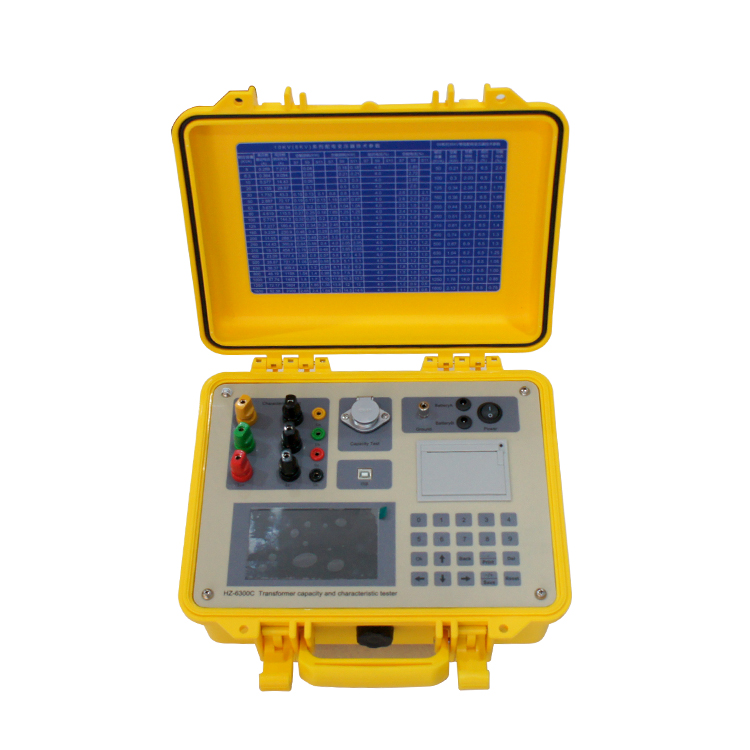
HZ-6300C Transformer Capacity Testing

 中文
中文
 English

 +86-312-6775656
 +86 13731210226
 sales03@bdhuazheng.com
