1. Performance and uses of power transformers:
1. A step-up transformer can be used to increase the terminal voltage of the generator to tens of thousands or hundreds of thousands of volts to reduce the transmission current and reduce the energy loss on the transmission line without increasing the wire cross-section to transmit electric energy over long distances.
2. Use a step-down transformer to reduce the high voltage to a low voltage suitable for electrical equipment, and convert the high voltage of the transmission line into various levels of voltage to meet the needs of various electrical loads.
3. Purpose: It is an electrical device that changes AC voltage. This plan topic mainly discusses the installation and commissioning of power transformers with a voltage of 10KV, a rated capacity of 1000KVA, and a frequency of 50HZ.
2. The composition and function of power transformer:
1. High and low voltage insulating bushing: It is the main insulation device outside the transformer box. It has fixed leads and main components connected to the external circuit.
2. On-load tap changer: Change the number of primary winding turns, adjust the secondary voltage, and perform on-load and no-load air voltage regulation.
3. Gas relay: It is connected with the control circuit to form a gas protection device.
4. Explosion-proof tube: When a fault occurs inside the transformer, the pressure increases dramatically and provides pressure protection.
5. Oil pillow: It is an oil replenishment-level oil storage device during operation of the transformer. It has an oil standard pipe to monitor the oil color and oil level. There is an oil filling hole and an air outlet valve at the top.
6. Respirator: It is equipped with silica gel to absorb moisture. The silica gel turns light blue when dry. When the moisture absorption is saturated, it turns light red. At this time, it can be restored by taking it out and replacing it or drying it at high temperature while still maintaining its original performance.
7. Radiator: Its function is to reduce the operating temperature of the transformer.
8. Oil tank, transformer shell, protective winding and iron core.
9. High and low windings: made of insulated copper wire or aluminum wire, the circuit part that establishes a magnetic field and transmits electrical energy.
⒑ Iron core: The iron core constitutes the magnetic circuit of the transformer and is made of stacked silicon steel sheets.
⒒ Oil drain door: The door is at the bottom of the fuel tank and is used for draining oil and taking oil samples.
⒓ Thermometer: monitors the operating temperature, measures the upper oil temperature, and has a thermometer socket.
3. The following work should be done before installing the transformer:
1. Working hours quota: (according to national quota standards) The comprehensive working days required for body installation are 21 working days. The work content includes: unpacking inspection, main body in place, body inspection, casing, oil pillow and radiator cleaning, etc., oil column test, attachment installation, production and installation of pad iron and wheel stopper, supplementary column and overall installation after installation Sealing test, grounding, touch-up paint, etc. Whether the transformer needs to be dried during the installation process will be determined after inspection and judgment. It needs to be dried. The iron loss drying method requires 20 man-days for drying, and the man-days required for oil filtration are 3.38 man-days/ton. The man-days required for debugging will be calculated separately.
2. Installation site layout: It is best to carry out power transformer overhaul and assembly work in the maintenance room. If there is no maintenance room, you need to choose a temporary installation site. It is best to choose a place near the foundation of the transformer to put the transformer in place. You can also install it on the foundation on the spot. There should be a tent at the outdoor site. The temporary installation site must be easy to transport, with flat roads and sufficient width. The ground should be solid, flat and dry, away from smoke windows and water towers, and the distance from nearby buildings must meet fire protection requirements.
3. Specify security measures:
①Prevent accidents such as electric shock and falling.
②Prevent insulation from overheating.
③Prevent fire.
④Prevent something from falling into the fuel tank.
⑤Prevent accessories from being damaged.
⑥Prevent the transformer from overturning.
4. Formulate technical measures:
① Prevent the transformer core from getting wet.
②How to ensure that all connecting parts are in good contact.
③The sealing of each part should be good and there should be no oil leakage.
④How to ensure transformer insulation and oil insulation.
5. Basic procedures for installation work:
① Preparation work (tools, materials, equipment, drawings)
② Inspection and judgment of insulation (mainly coils and cores)
③Inspection of accessories (should be complete and intact)
④Inspection of hanging core (to prevent moisture absorption and tools, parts, etc. from falling into the fuel tank)
⑤Accessory installation (appearance inspection, insulation measurement and rigorous testing)
⑥Final work. ⑦Handover test. ⑧Trial operation.
6. Organizational division of labor among staff:
①Installation commander and technical person in charge
②Safety officer
③Oil filter group
④ Hoisting and transportation personnel
⑤Test personnel
⑥Installer.
7. Requirements for transformer room:
①First level fire protection
②Good ventilation
③The safety distance should be sufficient
④The foundation platform should be solid
⑤The hoisting facilities should be in good condition.
8. Preparation of tools and materials:
⑴Installation machinery (such as vacuum pumps, oil pumps, oil tanks, compressed air machines, oil filters, welding machines, portable light transformers, valves, various wrenches, etc.)
⑵Testing instruments (such as megger, dielectric loss angle measurer, high-voltage test transformer, voltage regulator, ammeter, voltmeter, power meter, thermometer, etc.)
⑶ Lifting equipment (such as cranes, hangers, lifting beams, winches, wire ropes, pulleys, chain cranes, etc.)
⑷Insulating materials (such as insulating oil, cardboard, cloth tape, bakelite insulating paint, etc.)
⑸Sealing materials (such as anti-right rubber gasket, asbestos rope, steel bottom, shellac paint, nylon rope, etc.)
⑹ Bonding materials (such as epoxy resin glue, glue, cement, mortar, etc.)
⑺Cleaning materials (such as white cloth, alcohol, gasoline, etc.)
⑻Other materials (such as asbestos boards, square wood, wires, steel pipes, oil filter paper, petroleum jelly, enamel paint, etc.)
9. External inspection of transformer:
①Contents without mechanical damage
②The box cover bolts are intact
③The gasket is well sealed
④No defects on the casing surface
⑤No oil leakage or oil leakage
⑥No rust, complete paint
⑦All accessories are intact
⑧The wheel track of the roller is consistent with the track track of the basic rail.
4. Conditions and requirements for transformer hanging core inspection:
1. After long-distance transportation, the transformer will be subject to large vibrations and needs to be inspected. The inspection of the transformer body is divided into hanging core and hanging cover. Regardless of the hanging core or the hanging cover, the inspection content is the same. The core inspection should be completed within one working day, speeding up the inspection process.
2. Take hanging core inspection as an example:
⑴ The core lifting of the transformer should be carried out indoors. If it is outdoors, there should be a tent to prevent core lifting from rain, snow, fog, sand and other bad weather.
⑵ In winter, the temperature of the hanging core must not be lower than zero, otherwise the transformer will be heated up to make the iron core temperature 10°C higher than the surrounding temperature.
⑶ The shorter the time the iron core is exposed to the air, the better. It should not exceed 16 hours when the relative humidity is 65%, and it should not exceed 12 hours when the relative humidity is 25%. The calculation time is from the beginning of oil discharge to the end of oil filling.
⑷ When the relative humidity of the weather exceeds 75%, core hanging inspection is not allowed.
⑸ During the inspection of the lifting core, special attention should be paid to preventing parts and tools from falling into the fuel tank.
5. Preparation before lifting the transformer core:
⑴Preparation of tools and materials: such as oil storage tank, oil filter, set of wrenches, guide book, oil-resistant rubber rope, white cloth, insulating cardboard, etc.
⑵ Preparation of lifting equipment: such as crane, inverted chain, lever hoist, tripod, wire rope, etc. If inverted chain is used, the hanger must be set up according to the height and weight of the transformer.
⑶ Treatment of transformer oil, take oil samples for analysis and testing, and make preparations for oil filtering, including oil filter paper. ⑷ Prepare the oil pan and put the wire core by hand.
The height (h) of the hanger should not hinder the lifting of the machine body. Therefore: h=h1+h2+h3+h4+h5 in test = h1 height of the fuel tank h2 height of the body h3 height of the hanging rope sleeve h4 minimum distance of the pulley (or inverted chain) h5 backup height (300~500mm) 1. Hoisting Beam 2. Pulley 3. Rope sleeve 4. Body 5. Fuel tank.
6. Core lifting steps:
⑴Choose the position of the lifting core and drain the oil (place it below the market)
⑵Remove the explosion-proof cylinder, oil pillow, and gas relay
⑶Remove the large cover bolts
⑷Use the balance iron to lift the iron core out and place it in the oil pan
⑸Inspection:
①Wire core insulation
②Iron core insulation
③ Core bolt insulation
④ Tap changer contact insulation
⑤High and low voltage leads
⑥Oil tank debris
⑦Is the heat pipe blocked?
⑧Remote measurement insulation resistance
⑨Measure DC resistance
⑹ If no problems are found after checking all items, they should be reinstalled in time and the iron core should be reinstalled in the fuel tank.
⑺Strong large cover bolts
⑻Install the removed accessories
⑼Inject qualified oil
⑽ Do a full set of pressure test after being stationary for 6-10 hours
⑾On-site installation.
7. Transformer installation requirements:
1. The foundation track of the transformer should be level, and the oil pillow side should have a slope of 1-1.5%.
2. The transformer should be reinforced
3. The primary and secondary leads of the transformer should not stress the bushing.
4. The transformer shell is firmly connected to the neutral point and grounding device to form a trinity 5. 800KVA (gas relay installed)
8. Transformer trial operation:
1. The transformer can only be put into trial operation after all test items have passed.
2. A comprehensive inspection of the transformer should be carried out before trial operation.
3. The transformer undergoes 5 impact tests (closing test).
4. The no-load running time is related to the transformer capacity and is generally not less than 24 hours.
5. After the no-load running time is completed, the transformer is loaded again.
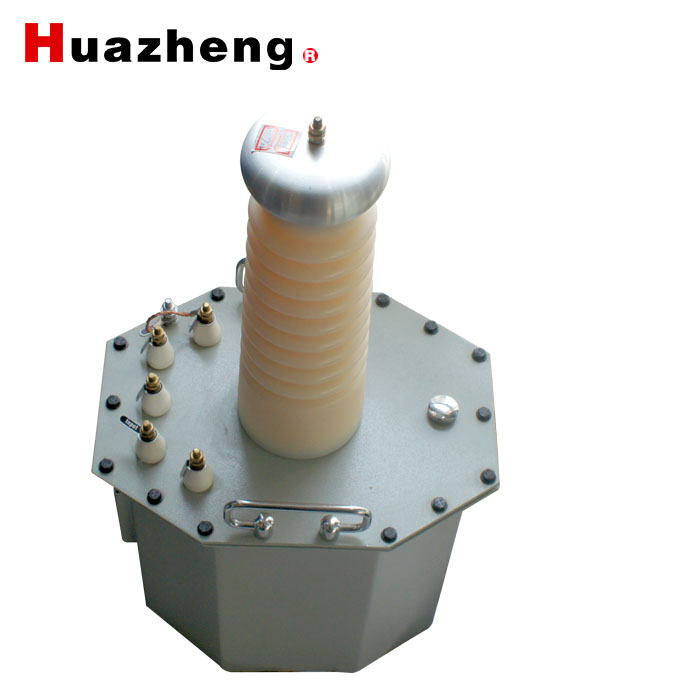
HZJ Oil Type Testing Transformer

 中文
中文
 English

 +86-312-6775656
 +86 13731210226
 sales03@bdhuazheng.com
